What If Wellness Is Something We Build Together?
By Dr. Rose Martin, CPP, ICPS
Most conversations about wellness begin with a list.
Get more sleep. Exercise regularly. Eat better. Manage your stress. Set boundaries. Spend less time on your phone.
It is familiar advice, and much of it is valuable. But every item on that list assumes something about the person receiving it. It assumes there is time to rest, a safe place to exercise, money and access to nutritious food, control over one’s schedule, and enough support to establish a boundary without risking a job, a relationship, or a place to live.
What happens when those conditions are missing?
Community psychology offers us a wider way of understanding wellness. Rather than looking only at an individual’s choices, symptoms, or behavior, we also examine what is happening around that person. We consider families, schools, workplaces, neighborhoods, institutions, public policies, culture, and access to resources. These environments quietly shape what people experience and what choices are realistically available to them.
In other words, wellness is personal, but it is never entirely private.
A parent may understand the importance of preparing healthy meals and still live far from a full-service grocery store. A teenager may be encouraged to spend more time outdoors while living in a neighborhood without safe sidewalks or public spaces. An older adult may want more social connection but lack reliable transportation. An employee experiencing chronic stress may practice breathing exercises each morning and then return to a workplace where the schedule is unpredictable and the expectations are unreasonable.
These people do not lack motivation. They are responding to the conditions of their lives.
Public health research confirms the importance of those conditions. The federal Healthy People 2030 initiative explains that the places where people are born, live, learn, work, play, worship, and age affect their health, functioning, and quality of life. Housing, transportation, education, employment, neighborhood safety, income, food access, air quality, and social connection all matter.
The World Health Organization similarly identifies daily living conditions and access to power, money, and resources as powerful influences on health. This does not erase personal responsibility or individual agency. It gives us a more complete and honest picture of what health requires.
When we tell people to make better choices, we should also be willing to ask whether we have built communities that make those choices possible.
That question is central to community psychology.
The field is grounded in a simple but powerful idea: people and environments affect one another. If we want to improve well-being, we cannot focus exclusively on helping individuals adapt to harmful or inadequate conditions. We must also improve the conditions themselves.
A coping strategy can help one person withstand a difficult environment. Changing that environment can prevent hundreds of people from being harmed by it.
This is where the conversation becomes hopeful.
Our environments are not fixed. Workplaces can change their policies. Schools can create a stronger sense of belonging. Neighborhoods can organize around safety, transportation, green space, or food access. Local governments can design communities that make it easier for people to move, connect, participate, and thrive. Residents can identify problems, share knowledge, and influence decisions.
Even something as ordinary as knowing our neighbors can matter. The U.S. Surgeon General’s guidance on social connection describes connection as an important part of individual, community, and societal health. Supportive relationships can strengthen our ability to manage stress, while loneliness and isolation are associated with serious health risks.
Community is not simply the backdrop to our lives. It is part of our health.
So, what can one person do with an idea this large?
Begin by looking one circle wider.
When you encounter a problem in your own life, resist the immediate urge to interpret it as a personal failure. Ask what conditions may be contributing to it. Is your exhaustion only about time management, or do you have more responsibilities than one person can reasonably carry? Is your isolation a sign that you need to “put yourself out there,” or are there too few welcoming places nearby where people can gather? Is a family struggling because they need more discipline, or because transportation, childcare, work schedules, and service systems rarely align?
The purpose of these questions is not to surrender our agency. It is to direct our energy toward the right problem.
Then, identify what you can influence.
You may be able to organize a walking group, check on an isolated neighbor, support a local business, create a more humane practice at work, attend a community meeting, volunteer at a school, or advocate for a safer intersection. You may have information, relationships, professional knowledge, or access that can help someone else navigate a system.
You do not need to hold public office or lead an organization to shape the environment around you. Every workplace, classroom, faith community, neighborhood, and family has a culture. Culture is created through repeated decisions about whose needs are considered, whose voices are heard, and what behavior is accepted.
We should also become more curious about the decisions being made in our names. Who determines whether a neighborhood receives a park, a bus route, a grocery store, or a health clinic? When are those decisions made? Are community members present? Whose experience is missing from the room?
Civic participation may not appear in a traditional wellness routine, but having a voice in the conditions that shape our lives is deeply connected to well-being.
There will always be a place for individual practices. Take the walk. Drink the water. Make the appointment. Rest when you can. Protect your peace.
And then look around.
Who else is struggling with the same obstacle? What would make the healthier choice easier? What can be changed so fewer people have to fight so hard for the basic conditions of a good life?
Perhaps wellness is more than something we pursue alone. Perhaps it is something we create in our homes, strengthen through our relationships, and build into the communities we share.
A healthier life becomes more possible in a healthier community. Each of us has a hand in creating one.
Sources
- Social Determinants of Health, Healthy People 2030, U.S. Department of Health and Human Services
- Social Determinants of Health, World Health Organization
- Social Connection, Office of the U.S. Surgeon General
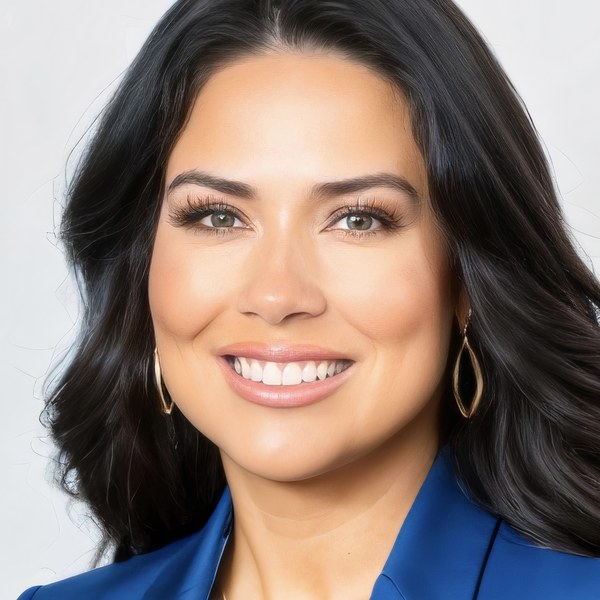
About Dr. Rose Martin
Dr. Rose Martin, CPP, ICPS, is a community psychologist, public policy professional, and program evaluator whose work focuses on the ways communities, institutions, and public systems shape individual and collective well-being. She holds a doctorate in Applied Learning Sciences and a Master of Science in Community & Social Change from the University of Miami.
Her experience spans community-based participatory research, needs assessments, trauma-informed initiatives, prevention, program design and evaluation, civic engagement, and legislative advocacy. Across government, nonprofit, healthcare, and educational settings, she translates research, data, and community knowledge into practical strategies that address the conditions influencing health, opportunity, and quality of life.
Dr. Martin currently serves in Miami-Dade County government, working at the intersection of research, policy, civic leadership, and community development. A second-generation Miami native, she brings a deeply place-based perspective to her work and writes about the public decisions and community conditions that shape how people live and thrive.